Anji DNA
安吉DNA
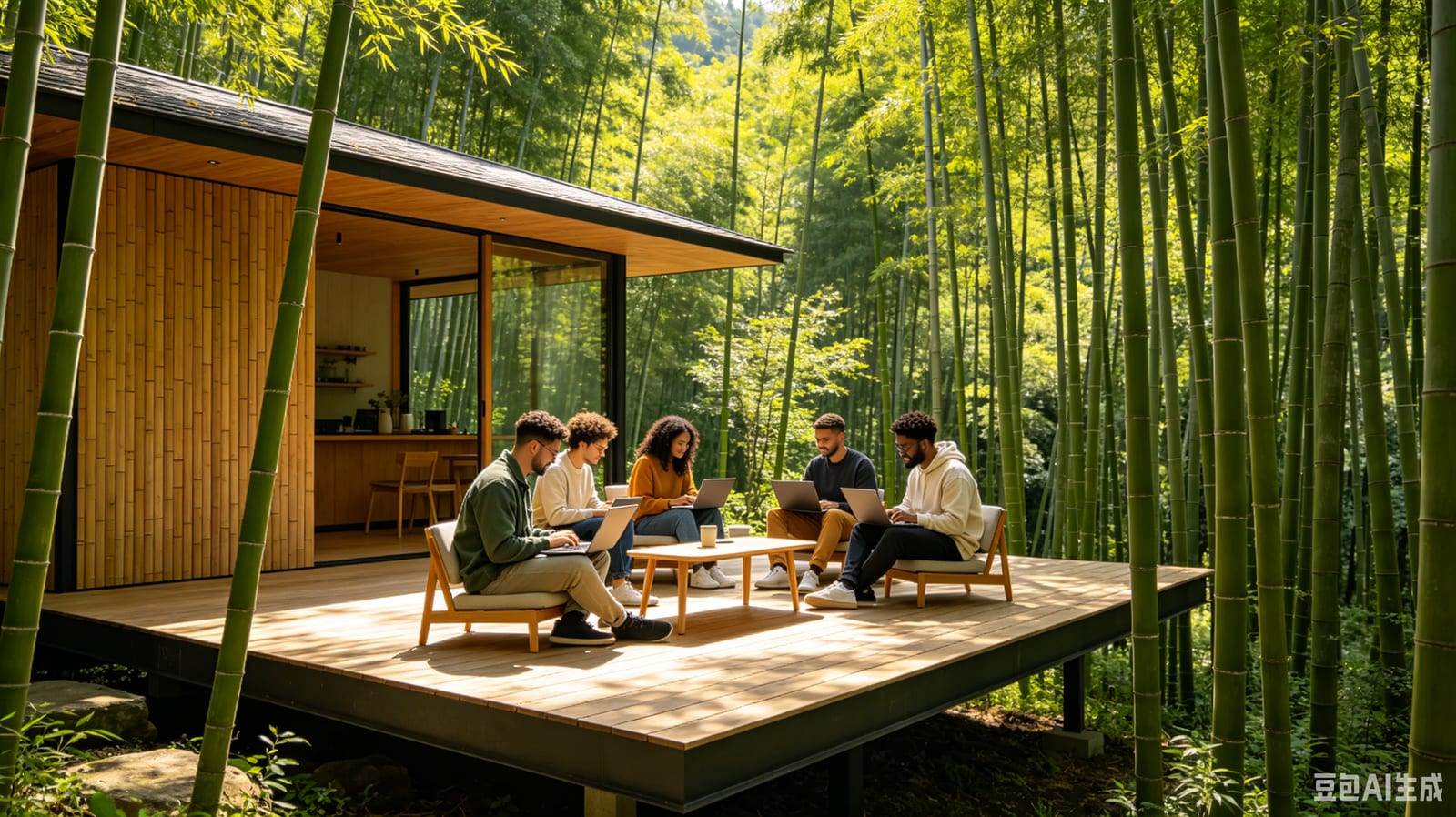
Anji DNA sits in the middle of Zhejiang’s bamboo belt, where the green stalks grow thick enough to filter the light and the air tastes distinctly different from any Chinese city. The base occupies a converted bamboo processing factory — not a retrofitted guesthouse — redesigned from the ground up for remote workers and digital nomads. It opened in late 2021 in Xilong Township, Anji County, surrounded by bamboo groves and white tea fields, roughly one hour from central Hangzhou.
What makes it work
Most co-living spaces in China are urban: great amenities, constant stimulation, urban noise. Anji DNA makes the opposite bet: that the best thinking happens when you can walk through a bamboo forest after lunch and come back ready to write, code, or design.
The community skews toward founders, writers, and developers who’ve tried the Shanghai/Beijing circuit and want to trade intensity for clarity. Many residents stay 3–6 months. The base accommodates up to 120 residents at a time and has maintained occupancy above 95% since opening — a telling signal for a rural co-living space. Since 2021, nearly 5,000 digital nomads have passed through, including residents from the US, France, the UK, Brazil, and elsewhere.
Community and programming
DNA runs weekly community dinners, skill-sharing sessions, and optional group excursions to tea farms, local villages, and Anji’s white-water rafting spots. The community managers speak English fluently — unusual at this price point in rural China.
Day-to-day, the social culture leans bottom-up: spontaneous tech talks, skill swaps, frisbee, paddleboarding, weekend markets, and group tea-picking hikes. Nothing is mandatory. The atmosphere is deliberately loose. Long-term residents frequently end up collaborating professionally — the scale is small enough that real relationships form.
Getting there
Anji is served by buses from Hangzhou East Station (2 hours, ~$8) and Hangzhou’s downtown bus hub. The base provides a shuttle from Anji county town. Direct bus services from Shanghai South Station also run on weekends (~3 hours).
For flights, Hangzhou Xiaoshan Airport is approximately one hour by car. By high-speed rail, Huzhou Station is the closest stop — from there it’s about 40 minutes by taxi or local bus.
Pricing
Minimum stay is 7 nights; longer stays get progressively better rates. All room types include coworking access. 2026 reference pricing:
- Dormitory (4–6 beds): ¥240–480/week · ¥640–1,900/month
- Private double room: ¥430/week · ¥1,080–2,000/month
- Private single / container unit: ¥980/week · ¥2,980–3,500/month
- Daily food: ¥20–50/day at the canteen or via delivery
All-in monthly costs — accommodation, coworking, and basic living — typically run ¥3,000–5,500, which is 30–50% below comparable urban options in Hangzhou or Shanghai. That puts it in the same cost range as Southeast Asian nomad hubs, with considerably more reliable infrastructure.
Network and working conditions
5G signal covers the entire property. Fiber bandwidth runs 200–500 Mbps down and 40–80 Mbps up. The connection is stable enough for international video calls, software development, content production, and light AI workloads — noticeably more reliable than rural co-living options in Thailand or Bali. WiFi extends to outdoor lawns and common areas, so changing your working environment mid-day doesn’t mean losing connectivity.
Who it’s best for
Writers finishing books. Developers on a deadline who need zero distractions. Founders who want to think clearly about their next move. Anyone who has discovered that silence is the scarcest resource in their current working environment.
The base is also meaningfully foreign-friendly: staff have years of experience hosting international residents, core services are available in English, and foreign bank cards can be linked to Alipay and WeChat Pay for daily payments.
Practical notes
- Applications: Submit through the official WeChat public account; approval is quick and informal. Minimum stay is 7 nights.
- Visa: A standard tourist visa covers stays under 30 days. Longer residency requires appropriate documentation — confirm your specific situation before committing to an extended stay.
- Nearby: White tea picking, bamboo forest hikes, historic village walks, and weekend day trips through northern Zhejiang’s rural landscape.
Amenities
- ·Converted industrial-style loft spaces (former bamboo factory)
- ·Open coworking, private focus zones, and independent meeting rooms
- ·Dormitory beds, private doubles, and standalone container units
- ·Gigabit-class fiber with full outdoor WiFi coverage
- ·Shared kitchen (fully stocked), community canteen, and café bar
- ·Self-service laundry and 24-hour hot water
- ·Outdoor lawn, basketball court, skate ramp, and gym
- ·KTV room and board game lounge (many built by residents)
- ·Bamboo forest hiking trails
- ·Weekly community events and cultural excursions
- ·Laundry and cleaning included
Plan Around This Base