Procedures Guide
Detailed breakdown of the six most popular procedure categories for international patients in China — what each involves, typical costs, and how they compare to U.S. pricing.
Dental
Implants, orthodontics, cosmetic restoration — the most popular category
Dental care is the single most popular reason foreign patients travel to China, and the savings are immediate and dramatic. A single titanium implant with crown runs $800–1,400 at a top Shanghai or Beijing clinic — compared to $3,000–5,000 in the U.S. Full-mouth reconstruction that would cost $40,000+ in America can be completed for $8,000–14,000.
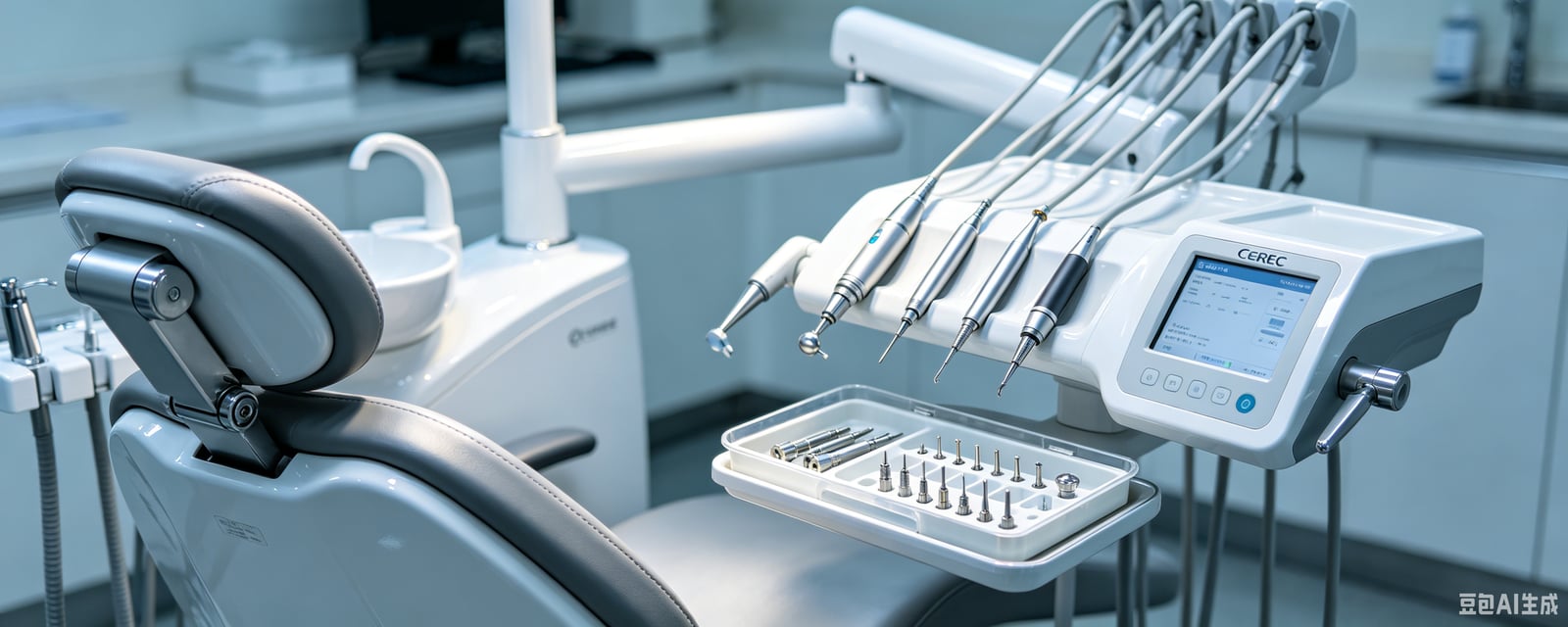
Implant brands (Nobel Biocare, Straumann) and aligner systems (Invisalign) used in China are identical to those used in U.S. clinics. CEREC same-day crown milling, digital smile design, and cone-beam CT scanning are routine. The savings come from lower overhead and labor costs — not lower-grade materials.
| Procedure | U.S. Cost | China Cost | Saving vs. U.S. |
|---|---|---|---|
| Single dental implant (abutment + crown) | $3,000–5,000 | $800–1,400 | 70–85% |
| Porcelain crown (per tooth) | $1,200–2,000 | $250–400 | ~80% |
| Dental bridge (3 units) | $3,500–6,000 | $700–1,200 | ~80% |
| Full Invisalign treatment | $8,000–12,000 | $3,500–5,500 | 55–70% |
| Traditional braces (metal brackets) | $5,000–7,000 | $2,000–3,000 | 55–70% |
| Porcelain veneer (per tooth) | $1,500–2,500 | $400–700 | 70–80% |
| Root canal (front tooth) | $1,200–1,800 | $300–500 | 70–80% |
| Cleaning + full panoramic X-ray | $400–700 | $80–150 | 80–90% |
| Full-mouth restoration | $40,000–80,000 | $8,000–14,000 | ~80% |
Book a free consultation on arrival — most top clinics offer same-day digital X-rays and treatment planning at no charge. Nobel Biocare, Straumann, and Invisalign brands used in China are identical to those in Western clinics; the savings come from lower overhead, not lower-grade materials.
Reputable National Dental Chains
A publicly listed dental group and one of the largest players in China's private dental sector, with roughly 80+ dental institutions concentrated mainly in Zhejiang province (Hangzhou, Ningbo, and surrounding cities), alongside a smaller national footprint. Known for standardized care and a large-scale flagship hospital model.
Best suited to visitors whose itinerary includes Hangzhou or Ningbo.
One of China's largest dental chains by clinic count, with over 100 locations across roughly 50 cities nationwide, backed by Taikang Insurance Group. Offers implants, clear aligners, and cosmetic dentistry, and is easier to find in second- and third-tier cities than some competitors.
Good option if your itinerary includes smaller cities outside the major hubs.
Sister brands under Arrail Group, one of China's most established international-patient-oriented dental networks, founded in 1999 and operating 70+ clinics in cities including Beijing, Shanghai, Shenzhen, Guangzhou, and Chengdu. Positioned at the premium end, with many English-speaking dentists and a track record of treating expatriate and international patients.
Best choice for first-time visitors who want English-speaking staff and a strong international track record.
Vision & Diagnostic Imaging
LASIK, SMILE, eye exams, MRI, CT scans, endoscopy
China's ophthalmology centers are technically sophisticated. Femtosecond LASIK, PRK, SMILE, and ICL lens implantation are all widely available at major eye hospitals in Beijing, Shanghai, and Guangzhou. Bilateral laser correction runs $1,800–2,800 for both eyes — compared to $4,000–6,000 in the U.S. A comprehensive eye exam with same-day prescription glasses costs $150–300 all-in.
China's imaging and diagnostic infrastructure is equally compelling. MRI scans, low-dose CT, and combined colonoscopy + endoscopy procedures cost 85–95% less than U.S. prices — with modern Siemens and GE equipment, same-day results, and no months-long wait. These are easy to bundle alongside any other medical tourism trip.
| Procedure | U.S. Cost | China Cost | Saving vs. U.S. |
|---|---|---|---|
| LASIK / SMILE laser correction (both eyes) | $4,000–6,000 | $1,800–2,800 | 50–70% |
| ICL lens implant (per eye) | $3,500–5,000 | $1,500–2,500 | ~55% |
| Comprehensive eye exam + prescription glasses | $800–1,500 | $150–300 | 80–90% |
| Progressive lens glasses (frame + lens) | $400–800 | $70–210 | ~75% |
| MRI scan (one body region) | $1,000–8,000 | $80–150 | ~90% |
| Painless colonoscopy + endoscopy (with anesthesia) | $3,000–5,000 | $250–400 | 85–95% |
| Low-dose chest CT scan | $800–1,500 | $50–100 | ~90% |
Beijing Tongren Hospital and the Aier Eye Hospital chain are the most established options for vision correction. For imaging and diagnostics, any Tier-3A hospital offers same-day MRI and CT appointments without months of waiting.
Traditional Chinese Medicine
Acupuncture, cupping, chronic pain management
Traditional Chinese Medicine (TCM) — acupuncture, cupping, tuina massage, herbal medicine, moxibustion — is practiced at a clinical level in China that is qualitatively different from what is available in Western markets. TCM practitioners at major hospitals hold graduate degrees from specialized universities and often integrate with Western-trained physicians on complex cases.
For chronic pain, musculoskeletal conditions, post-surgical rehabilitation, and stress-related conditions, TCM offers evidence-backed therapeutic options. Acupuncture sessions at top TCM hospitals run $11–28 per session, versus $80–150 per session in the U.S. Many patients find a one-to-two week intensive treatment course in China achieves results that ongoing weekly sessions at home have not.
| Procedure | U.S. Cost | China Cost | Saving vs. U.S. |
|---|---|---|---|
| Acupuncture session | $80–150 | $11–28 | 80–85% |
| Tuina (60 min) | $80–120 | $15–35 | 70–80% |
| Cupping therapy | $60–100 | $8–20 | 80–85% |
| Herbal consultation | $150–250 | $20–60 | 75–85% |
The Guanganmen Hospital (Beijing) and Longhua Hospital (Shanghai) are nationally recognized TCM centers that also see international patients.
Oncology
Immunotherapy, targeted therapy, CAR-T, proton therapy
Cancer treatment is where China's medical system may offer the most consequential advantages for international patients. China leads the world in CAR-T cell therapy clinical trials and approved indications. Treatments for B-cell lymphomas, multiple myeloma, and certain solid tumors that remain investigational or unapproved in the U.S. are available at academic medical centers in Beijing, Shanghai, and Guangzhou.
Proton therapy centers — relatively rare even in the U.S. — are now operational at a growing number of Chinese hospitals, at costs roughly 60–70% below U.S. rates. PD-1/PD-L1 immunotherapy drugs that cost $150,000–300,000 per year in the U.S. are available at Chinese hospitals for $30,000–60,000, including domestic and biosimilar alternatives with strong clinical data.
| Procedure | U.S. Cost | China Cost | Saving vs. U.S. |
|---|---|---|---|
| PD-1 immunotherapy (annual) | $150,000–300,000 | $30,000–60,000 | ~80% |
| CAR-T therapy | $400,000–600,000 | $60,000–120,000 | ~80% |
| Proton therapy (full course) | $80,000–150,000 | $25,000–50,000 | 65–70% |
| Targeted therapy drugs (monthly) | $8,000–20,000 | $1,500–4,000 | ~80% |
| Comprehensive tumor panel | $5,000–15,000 | $800–2,500 | 80–85% |
Oncology cases require careful coordination. Contact the international patient department of your target hospital before traveling — most offer pre-consultation via email with medical record review.
Orthopedics
Joint replacement, spine surgery, sports injuries
Orthopedic surgery — particularly hip and knee replacement — represents a major category for medical tourists from countries with long surgical wait lists. In the U.S., knee replacement costs $35,000–50,000 out-of-pocket and often requires an 8–9 month wait. In China's top orthopedic centers, the same procedure (Zimmer Biomet, Stryker, or equivalent implants) runs $8,000–14,000, schedulable within weeks.
Robotic-assisted joint replacement using MAKO or domestic equivalents is available at major centers. Spine surgery, including spinal fusion and disc replacement, is similarly priced at 70–80% below U.S. rates. Sports medicine procedures (ACL reconstruction, rotator cuff repair, cartilage treatments) are also well-represented at hospital sports medicine departments in Beijing and Shanghai.
| Procedure | U.S. Cost | China Cost | Saving vs. U.S. |
|---|---|---|---|
| Total knee replacement | $35,000–50,000 | $8,000–14,000 | 70–75% |
| Total hip replacement | $32,000–45,000 | $7,500–13,000 | 70–75% |
| Spinal fusion (1 level) | $50,000–100,000 | $12,000–22,000 | 75–80% |
| ACL reconstruction | $20,000–50,000 | $4,000–8,000 | 75–85% |
| Rotator cuff repair | $15,000–25,000 | $3,500–7,000 | ~75% |
| Inpatient physiotherapy (per day) | $300–600 | $30–80 | ~85% |
Plan for a minimum 2-week stay post-surgery for initial physiotherapy. Many hospital campuses have on-site rehabilitation facilities with English-speaking physiotherapists.
Executive Health Checks
Comprehensive cancer screening, full imaging panels, preventive care
American preventive medicine is reactive by design — most imaging and cancer markers are ordered only after symptoms appear. China's system is built around early-detection packages that combine full-body imaging, cancer biomarkers, and cardiovascular screening into a single same-day visit.
The basic tier covers blood panel, urinalysis, ECG, abdominal ultrasound, and chest X-ray for $40–150. The mid-tier executive screen adds low-dose lung CT, tumor markers (CEA, AFP, CA199, CA125), thyroid and carotid ultrasound, and bone density for $200–400. The comprehensive panel adds 3.0T head MRI, painless colonoscopy + gastroscopy, cardiac echo, and optional liquid biopsy — all for $800–1,800, versus $8,000–15,000 in the U.S. The imaging equipment (Siemens, GE, Philips) is identical to Western hospitals; the difference is structural: lower facility costs and zero insurance overhead.
| Procedure | U.S. Cost | China Cost | Saving vs. U.S. |
|---|---|---|---|
| Basic annual physical | $300–800 | $40–150 | ~80% |
| Executive health screen (mid-tier) | $2,000–3,500 | $200–400 | 85–90% |
| Comprehensive cancer early-detection panel | $8,000–15,000 | $800–1,800 | 85–95% |
| Cancer tumor marker panel | $500–1,500 | $80–200 | ~85% |
| Full-body MRI screening | $2,000–5,000 | $400–800 | ~80% |
| Cardiac stress test + echo | $1,000–3,000 | $150–400 | ~85% |
Results are typically available within 24–72 hours. A colonoscopy + lung CT + brain MRI as a bundled preventive screen essentially doesn't exist at any price point in the U.S. — in China it's a standard outpatient package that can detect cancer or cardiovascular risk 5–10 years earlier than symptom-driven care.
Premium Independent Health Checkup Chains
China's leading listed premium health screening chain, with dedicated international VIP centers in Beijing, Shanghai, and Shenzhen. Offers private one-on-one service, full English medical reports, customized executive physicals, early tumor screening, whole-body MRI packages, and official medical invitation letters for visa applications.
Best for international visitors who want a fully managed, English-language screening experience with official documentation.
China's largest nationwide health checkup group. Its high-end Meizhao and Aoya VIP branches offer advanced full-body screening including low-dose CT, gastroscopy, and cardiovascular assessment. Professional English report translation and customized physical packages are available for international travelers and expatriates.
Best for widest geographic coverage — clinics in virtually every major city, with premium VIP branches in the largest metros.
A high-end private screening group operating ultra-luxury Xingyuanhui centers across major Chinese cities. Specializes in exclusive private checkups with one-on-one physician accompaniment, combined Western and TCM health evaluation, and English medical documentation for overseas visitors and foreign executives.
Best for those seeking a fully private, concierge-level screening experience combining Western diagnostics with TCM evaluation.
Cost Disclaimer: All figures are indicative and based on 2025–2026 data from international patient departments at major Chinese hospitals. Costs vary by hospital tier, specific implant brand, surgeon seniority, and hospital location. Exchange rate used: ¥7.2 = $1 USD. Always request a written itemized quote from your chosen hospital before making travel decisions. These figures are not a guarantee of price.