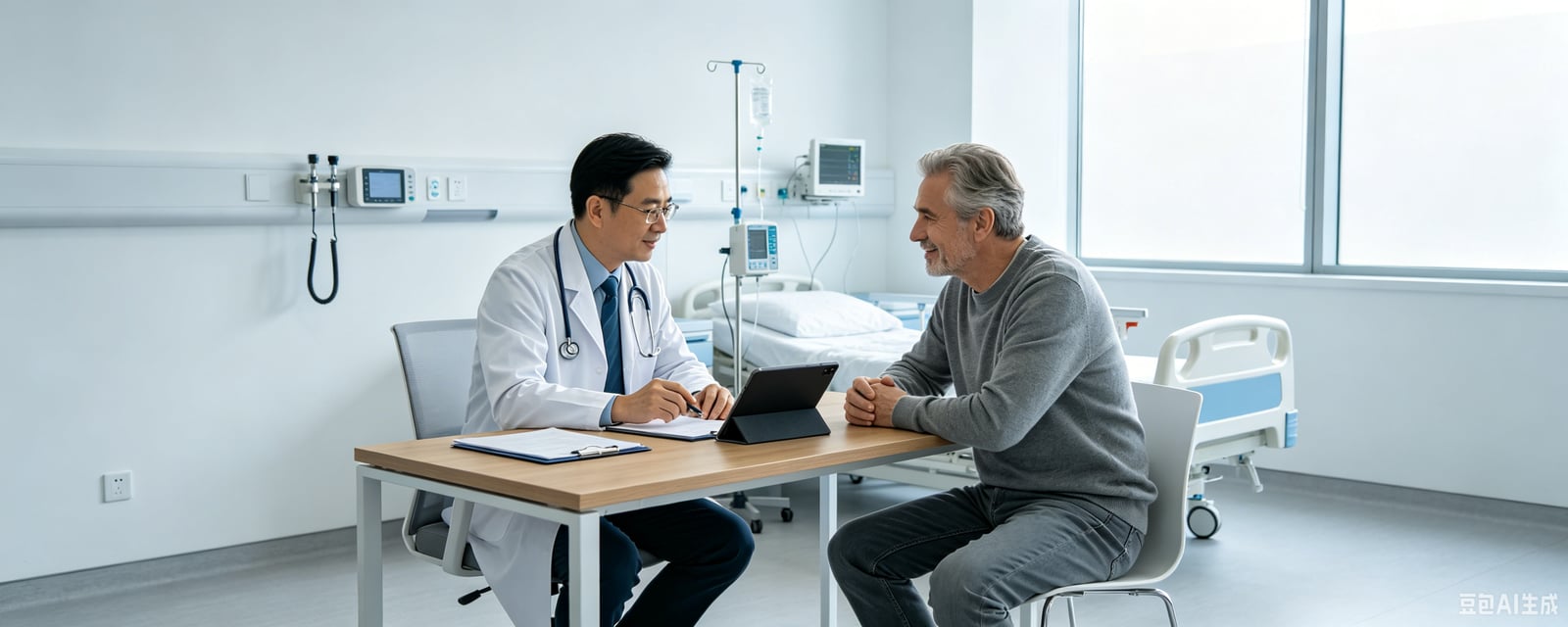
Why Choose China?
China has emerged as one of the world's most compelling medical tourism destinations — not because of marketing, but because of a convergence of structural factors that few other countries can match: clinical excellence, transparent pricing, minimal wait times, and an increasingly international-friendly hospital infrastructure.
For American patients in particular, the arithmetic is stark. A single dental implant costs $3,000–5,000 in the U.S. In China's top international hospitals, the same procedure — same materials, equivalent clinical training — runs $800–1,400. A knee replacement that costs $35,000–50,000 out-of-pocket in the U.S. runs $8,000–12,000 in Beijing or Shanghai, including the surgeon, anesthesiologist, hospital stay, and all follow-up imaging. After round-trip airfare and two weeks of accommodation, the patient often saves $20,000 or more.
Clinical quality — what the data says
China's top hospitals are not developing-world facilities offering discount medicine. Peking Union Medical College Hospital, West China Hospital (Sichuan University), and Huashan Hospital in Shanghai are ranked among Asia's finest by multiple international bodies. Their oncology, orthopedic, and cardiovascular departments operate at a standard that would be recognizable — and competitive with — top American academic medical centers.
Several specialties are genuinely world-leading. China leads the world in CAR-T cell therapy clinical trials and approvals; some immunotherapy protocols available there are not yet approved by the FDA. Robotic-assisted surgery platforms — including domestic equivalents of the da Vinci system — are standard equipment at tier-one hospitals. Ophthalmic and dental technology is consistently at or beyond the Western frontier.
Price transparency — the shock is how clear it is
One of the most surprising aspects of Chinese hospital care for Western patients is the pricing model. Costs are posted, itemized, and paid upfront or at discharge. There are no surprise billing events, no "facility fees" added retroactively, no inscrutable EOB statements arriving six weeks later. You receive a printed receipt itemizing every procedure, every medication, every consumable. Costs are typically 60–80% lower than equivalent U.S. care — not because corners are cut, but because labor costs, malpractice insurance, and administrative overhead are structurally lower.
Wait times — the other hidden cost
American patients waiting 8–9 months for a knee replacement face more than inconvenience — they face months of reduced mobility, pain, and sometimes deterioration. In China's international hospitals, the same surgery is typically schedulable within 2–4 weeks of a consultation. MRI and CT results arrive within 24–72 hours. Specialist appointments for international patients are generally available within days, not months.
The honest comparison with other medical tourism destinations
Thailand has an excellent medical tourism infrastructure (Bumrungrad, Bangkok Hospital) and genuine clinical quality in elective procedures. But costs are broadly similar to China for equivalent-tier hospitals, and oncology and advanced surgical options are more limited.
Mexico offers genuine savings for Americans who can drive across the border, particularly for dental work. But major surgical procedures, oncology, and advanced diagnostics are more reliably handled in China's tier-one hospital system.
India is the closest competitor on clinical depth, particularly in cardiac surgery and oncology. India's top hospitals (Apollo, Fortis) are world-class. The main practical differences: China's international hospital infrastructure is broader across more cities, English language support is less consistent in India outside major metros, and China's travel logistics — airports, transit, accommodation near hospitals — are generally superior.
The practical objections, answered
"I don't speak Mandarin."
You don't need to. All international hospital wings operate with English-speaking coordinators who accompany patients from intake through discharge. Bilingual records are standard. Medical translation services are available for specialist consultations. For day-to-day logistics outside the hospital, translation apps handle most situations effectively.
"What if something goes wrong?"
China's hospital malpractice and patient-safety systems are real and functional. For elective procedures at internationally accredited hospitals, the risk profile is not materially different from Western facilities. The practical answer is: choose JCI-accredited or equivalent hospitals (listed in our hospitals guide), carry travel insurance with medical evacuation coverage, and bring a complete copy of your medical records.
"My insurance won't cover it."
Most U.S. health insurance does not cover elective treatment abroad. For most patients pursuing medical tourism, the calculation is self-pay: even without insurance, the out-of-pocket cost in China is substantially lower than the U.S. co-pay plus deductible on covered procedures. Some international health insurance policies and medical tourism brokers offer plans that include China coverage — worth exploring if you are planning a significant procedure.
Who this is right for
- Uninsured or underinsured Americans facing large elective surgical bills
- Patients facing multi-month waits for orthopedic procedures
- Anyone considering dental implants, orthodontics, or cosmetic dental work
- Patients with cancer diagnoses who want access to novel therapies not yet available in the U.S.
- Anyone interested in a comprehensive executive health screening at a fraction of U.S. concierge medicine prices
- People who are already planning to travel to China and want to combine it with dental or optical care
Continue Reading